
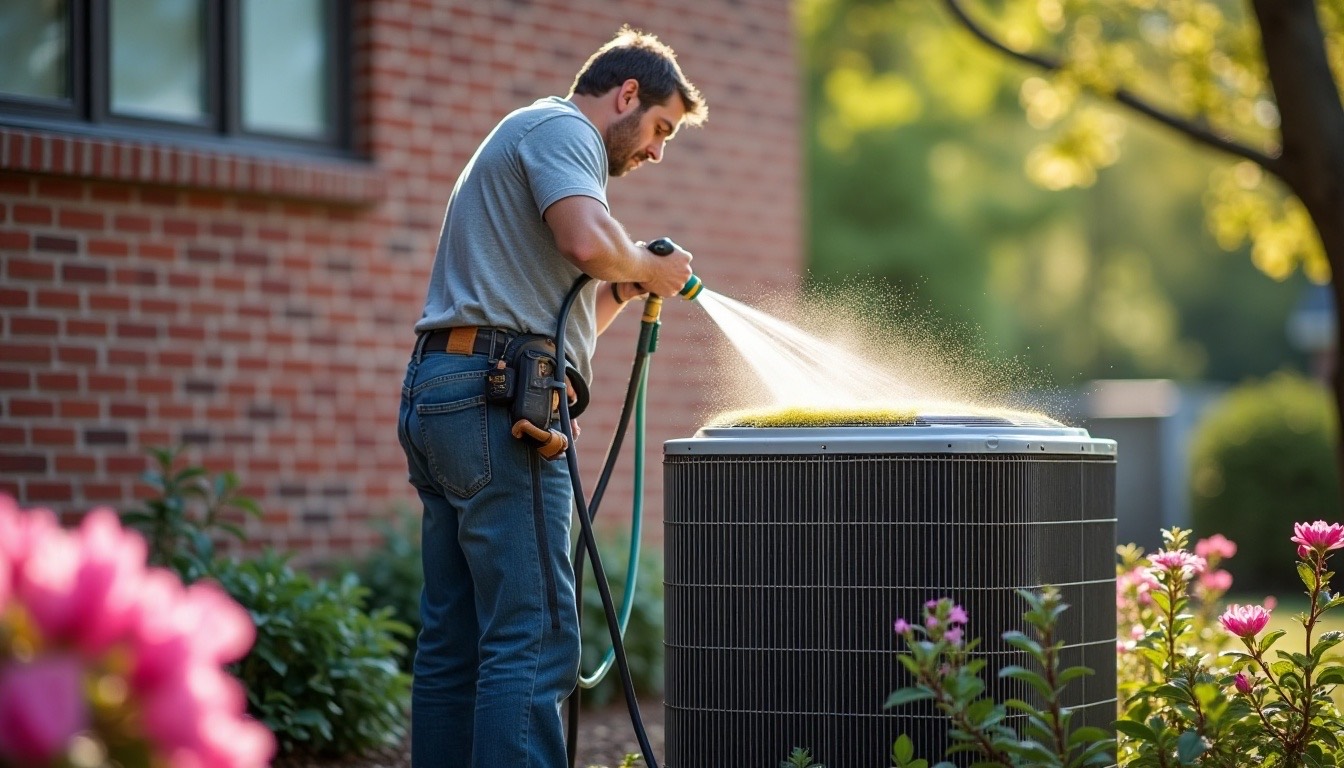
What a tune-up covers
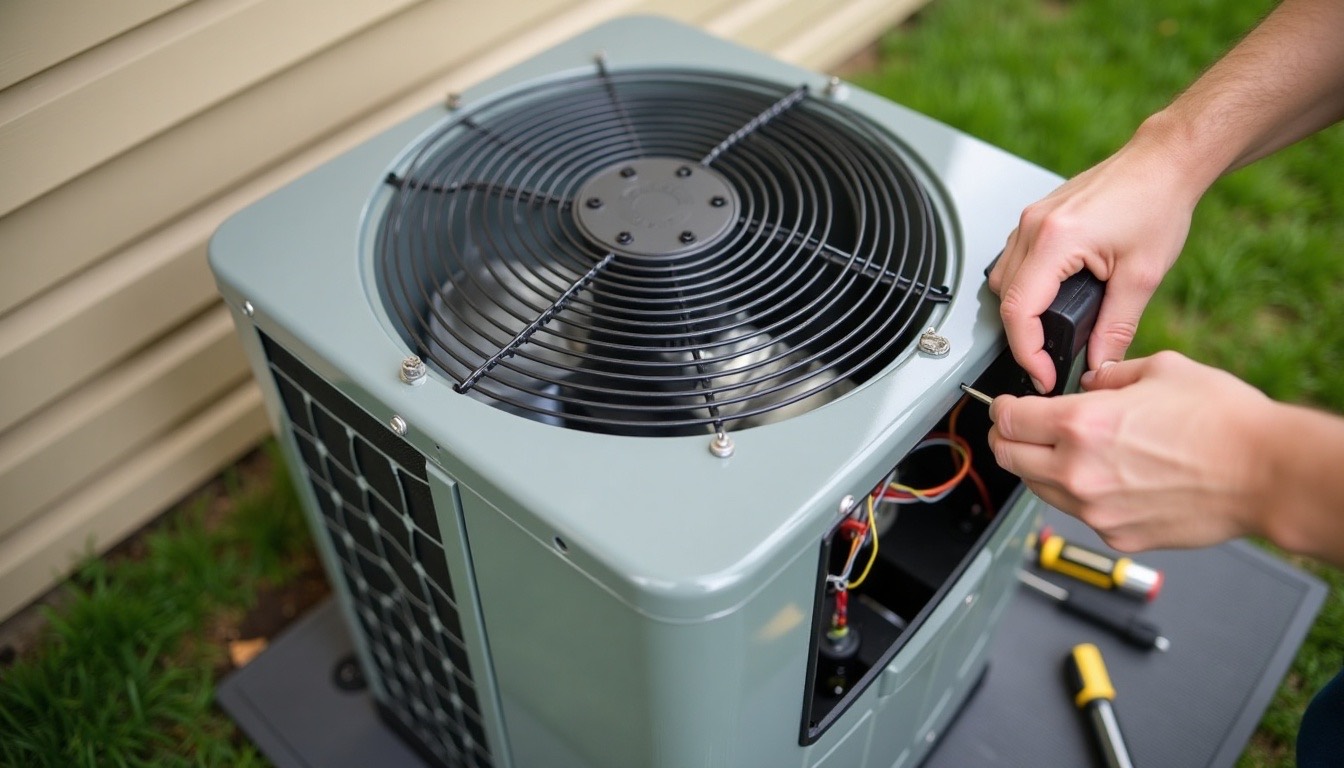
Outdoors: shut off the power, clean the coil from the inside out with a coil cleaner and a low-pressure rinse, straighten bent fins, clear leaves and grass from the base, and check that the unit sits level on its pad. Test the capacitor against its rating with a meter, inspect the contactor points, tighten electrical connections, and look at the fan motor and blade.
Indoors: check the filter, the blower wheel and motor, the evaporator coil where it can be reached, the drain pan and the condensate line. With the system running, read refrigerant pressures and the temperature split across the coil, check amp draw on the compressor and motors, and confirm the thermostat is cycling the system correctly.
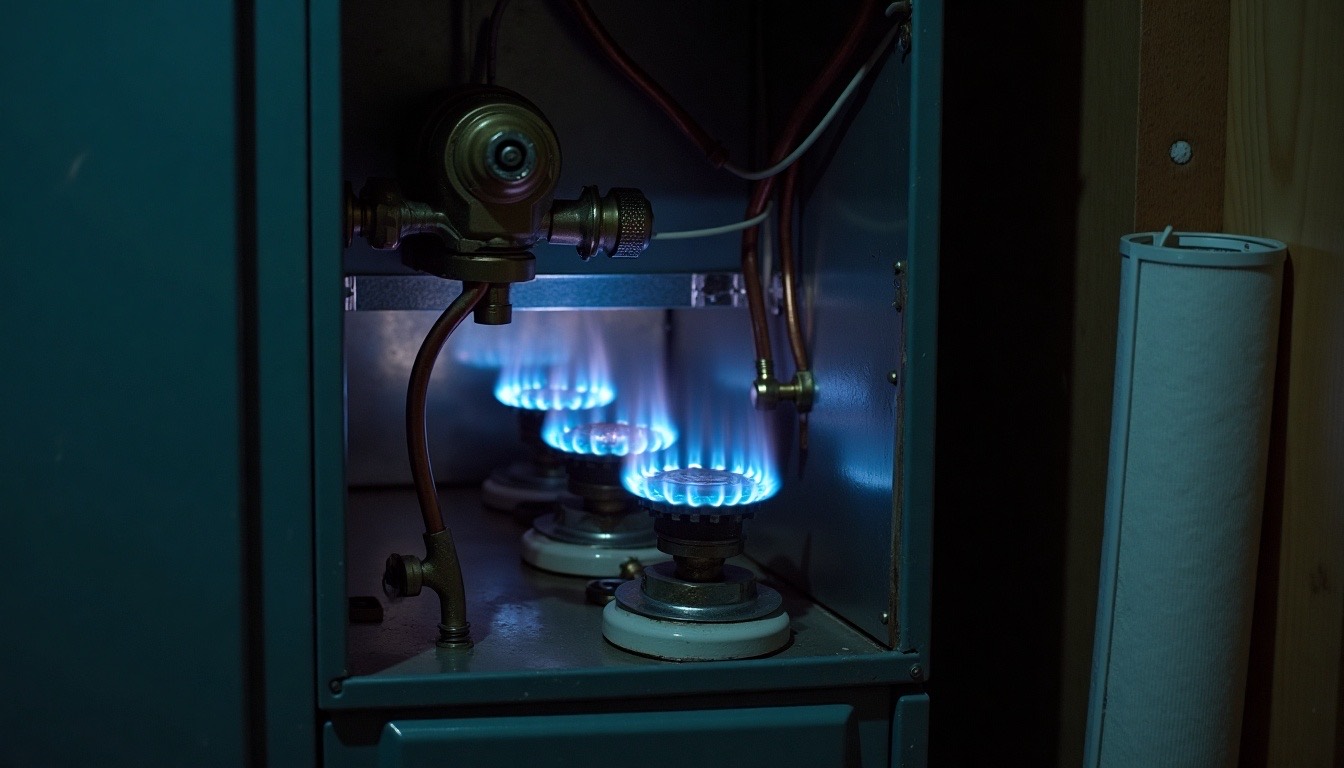
Heat pumps get their heating side checked in the fall, including the defrost control and the aux heat strips. Gas furnaces get the burner, flame sensor, ignitor, flue and carbon monoxide checks before winter.
You get a short written list of what was found. If a capacitor is reading well under its rating, that is the kind of thing worth replacing before it fails, and you hear why. If everything is fine, you hear that too. When a tune-up turns up a part that has already failed, it becomes the no-cool calls we run all summer, priced the same way.
Drain lines and mold
An air conditioner in a Tuscaloosa summer pulls a lot of water out of the air, and the condensate line that carries it away is warm, dark and wet. Algae and slime grow in it, and dust from the coil washes down into it. A clogged line either trips the float switch and shuts the system off, or overflows into a ceiling or floor.
Every tune-up flushes the line and pan and checks the trap and the float switch. In homes near the river and the lake, where humidity runs high most of the year, it is common to find mold on the blower wheel or in the first few feet of duct, especially if the system short cycles. Cleaning the coil and blower helps, and so does fixing the airflow problem underneath it.
A few signs the drain is starting to go between visits: water standing in the secondary pan under an attic unit, a gurgle from the drain at the outdoor end, a musty smell when the system first kicks on, or the AC shutting off on its own on a humid afternoon. Any of those is worth a message before the ceiling tells you instead.
Filters, plainly
The filter is the one piece of maintenance you do yourself, and it matters more here than in a lot of places because of spring pollen and summer run time. A basic one-inch filter should be checked monthly from March through September and changed when it looks grey. A thicker media filter lasts longer, often a few months.
Higher-rated filters catch more, but a very restrictive filter on a system with undersized returns chokes the airflow and can freeze the coil. If you are not sure what your system can handle, ask during the tune-up and we will tell you what fits and how often to change it. Write the size printed on the frame of the old filter somewhere handy, or snap a photo of it, so you are not standing in a store aisle guessing.
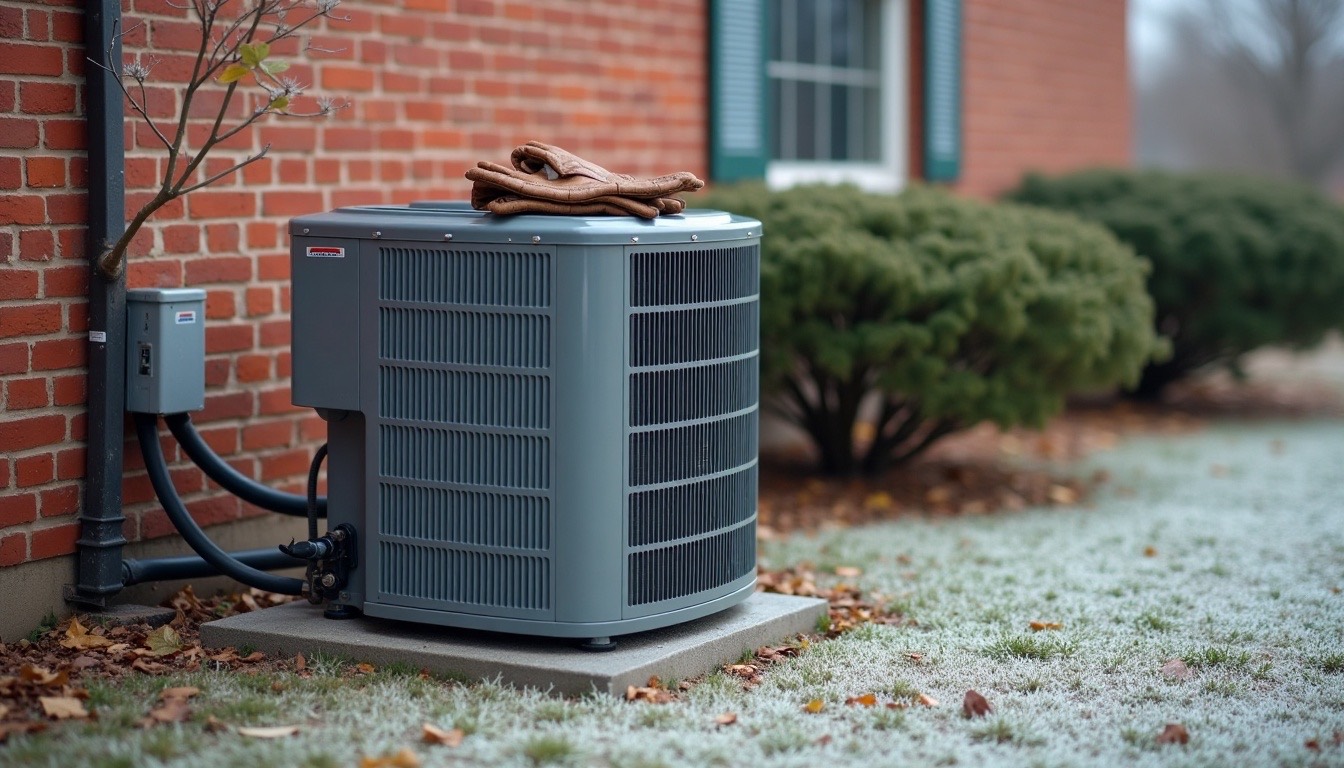
Keep the outdoor unit clear too. Two feet of open space around it, no shrubs pressed against the coil, no grass clippings blown into the fins and no pine straw piled at the base. A unit that cannot breathe runs hotter and longer, and in July that shows up in the power bill first.
Fall tune-ups for heating are just as worth doing, and for gas systems the gas furnace side of the fall visit includes the safety checks that go with any burner.
Related

AC and Heat Pump Repair in Duncanville
We find the real failure first and quote it in writing before work.