
Gas or electric heat
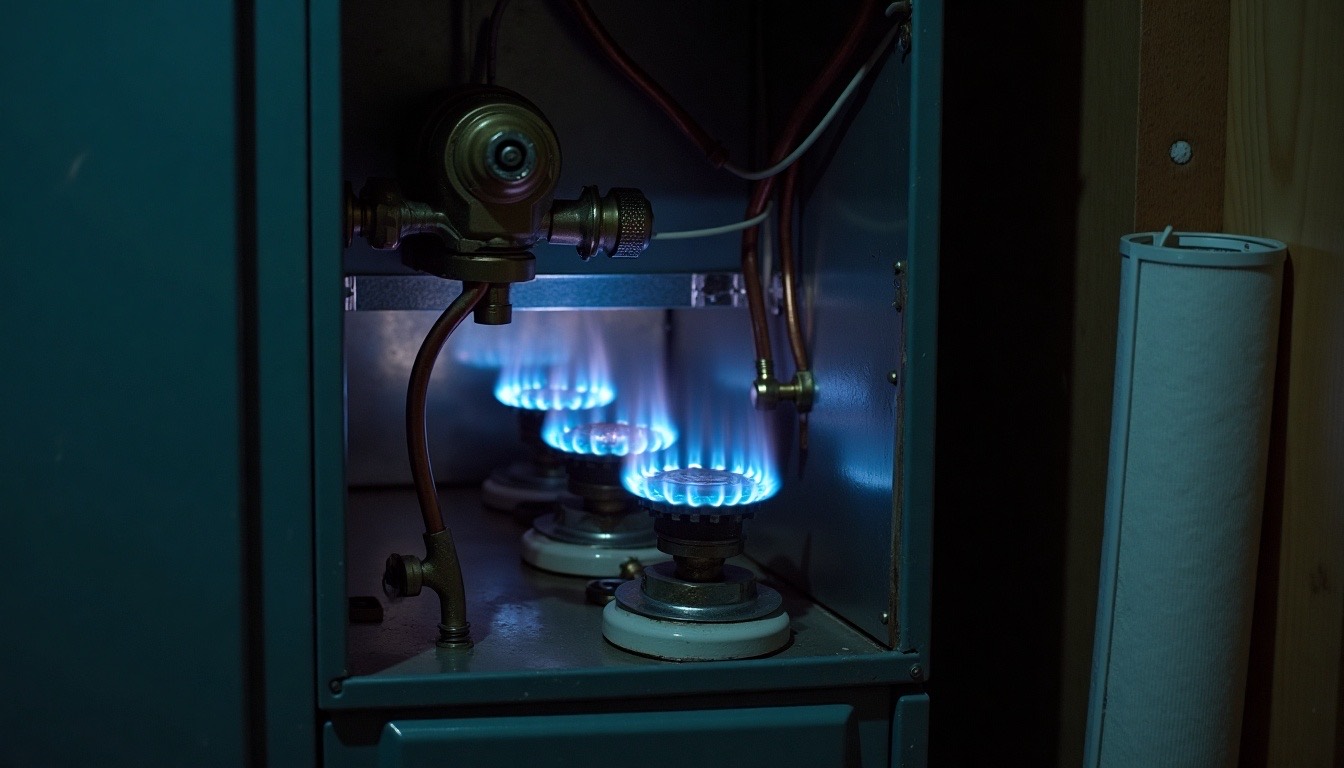
A gas furnace lights burners with a hot surface ignitor, proves the flame with a flame sensor, and pushes the warm air out with a blower. When the sensor is coated with residue, the burners light for a few seconds and shut off, over and over. When the ignitor cracks, nothing lights at all. When the inducer motor or pressure switch fails, the furnace never gets far enough to try. Each has its own sound and its own error code on the board's blinking light. If you can read the code through the little window on the furnace door, write it down before you turn the power off, because cycling the power clears it.
Electric furnaces and air handlers skip the flame and heat the air with resistance strips. They are simpler, but the strips, sequencers and relays burn out, and a blown fuse or tripped breaker on a big heating circuit is common after a cold week. In a lot of Tuscaloosa County houses the air handler is part of a heat pump system, and the strips are only backup. If that is your setup, the outdoor unit is the first place to look, and our page on when the heat comes from a heat pump covers that side.
Safety checks and carbon monoxide
Every gas furnace call includes the checks that keep a furnace from becoming a hazard. The tech looks at the flame for color and lift, checks the heat exchanger for cracks or rust-through where he can see it, confirms the flue is drafting outside and not spilling back, and tests for carbon monoxide at the furnace and the supply registers.
A cracked heat exchanger is the one we never talk anyone out of acting on, because it can let combustion gases into the air you breathe. If we find one, the furnace gets shut off and you get a straight explanation of what we saw. If you do not have a working carbon monoxide detector near the bedrooms in a house with gas heat, put one in before winter, whether or not we come out.
We also check the gas pressure at the valve, the condition of the flexible gas connector, and that the furnace has enough combustion air. A furnace in a closet that someone sealed up tight, or a utility room that became storage, can starve for air and burn dirty.
Older homes near campus and in neighborhoods like Forest Lake often have furnaces in a hall closet or a crawlspace, sometimes with venting that was changed when the water heater was replaced. Those flue connections are worth a look on any older house.
Thermostats and controls
A surprising number of no-heat calls are the thermostat. Batteries die. Wires come loose behind the wall plate. A newer smart thermostat gets installed without a common wire and quietly loses power. Or a heat pump thermostat gets swapped for one that does not know how to run aux heat, and the backup strips come on every morning.
We test the wiring at the wall and at the furnace board, check that the thermostat is configured for the equipment you actually have, and replace or install thermostats when the old one is the problem. If you want a programmable or smart thermostat, we set it up to match the system so it does not fight it. For a heat pump, that means telling the thermostat to bring on aux heat only when it is truly needed, which on most Tuscaloosa winter days is not often. For a gas furnace with a straight AC, it means the fan, stage and cycle settings match the equipment so the burner does not short cycle.
Fall is also a good time to have the whole system looked at before the first real cold, and a lot of people book a fall check alongside the spring one so heating and cooling both get a visit before their busy season.
Related
AC Repair in Brookwood
We make the drive, diagnose first, and quote the repair in writing before any work.